Pole Barn Wiring in Warsaw and Kosciusko County
A pole barn goes up fast and then sits there with no power in it.
We wire new buildings from bare studs, and barns that have been standing for twenty years with one light and an extension cord running out to them. The work splits about evenly between them, and together they are a good share of what we do.
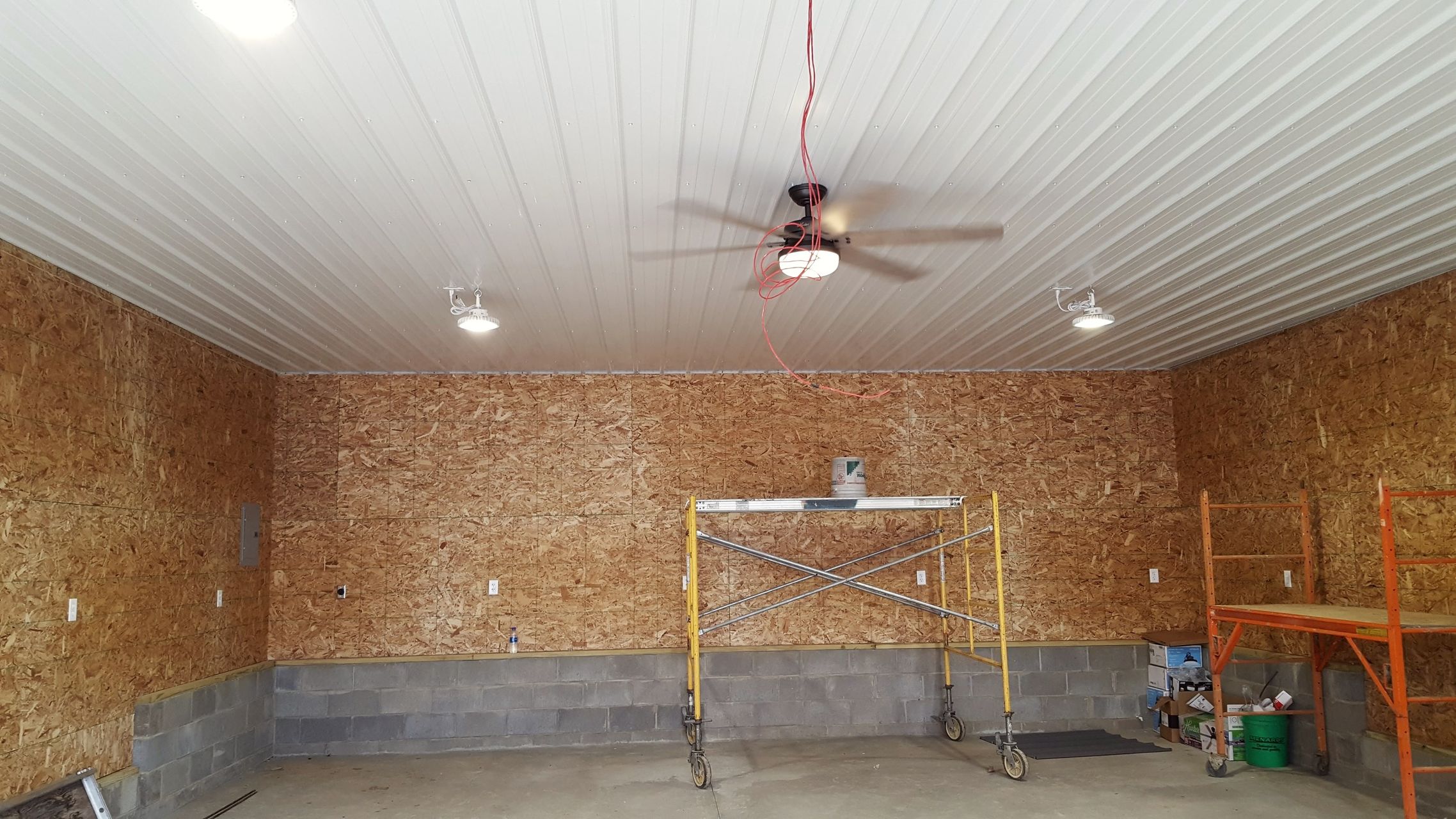
What goes in a pole barn
Most of these jobs are some mix of the same list:
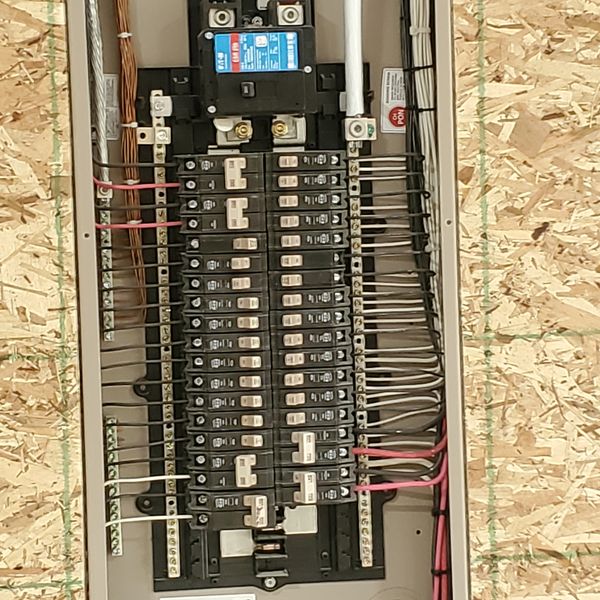
- A sub-panel in the barn, fed from the house or from its own service
- LED high bay lighting — the thing that changes the building most. A barn you can actually see in is a different building.
- 240-volt for a welder
- An air compressor circuit
- A heater — so the shop is usable in January
- Outlets around the walls, and enough of them, at working height
- Lights on the outside of the barn — over the doors, on the corners, on the approach
- An RV or camper outlet
- An EV charger
Not every barn needs all of it, but it is worth deciding what it needs now, because the cheapest time to put a circuit in a pole barn is before the walls are closed up.
New barn, or one that’s already up
If the barn is going up, get us in early. While the framing is open, running circuits is straightforward. After the steel and the insulation go on, the same circuits cost more and look worse. We would rather come out and look at the plan than come out afterward and work around it.
If the barn is already there, that is just as normal a job. Usually it means getting proper power out to it, setting a panel, and building from there. Plenty of barns are running on one circuit somebody stretched out from the house years ago. That is where a lot of these calls start.
Getting power out to it
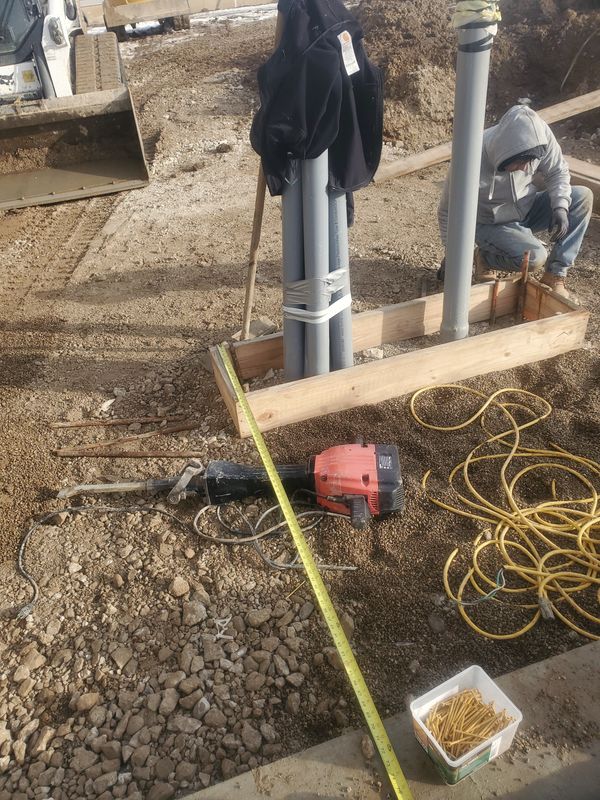
The barn is usually a good distance from the house, and that is the part people underestimate. A building that far off needs its own feed and its own panel rather than one long extension of a house circuit, and the feed has to be sized for what is actually going to be running out there, not just what is going in this month.
Underground or overhead is your choice. We can trench the wire in from the house or the meter, or run it across the yard on a pole. It comes down to cost.
We will come and look at the distance, the route and what the building is for, and tell you what it needs. Getting that part right the first time is most of the job, and everything after it is straightforward.
Shops, machine sheds and everything in between
Some of these are farm buildings: machine storage, a shop on the farm, a building for equipment that has to start in the cold.
Just as many are somebody’s shop: a pole barn behind the house with a lift in it, a welder, a compressor, a heater and somewhere to work on a truck in the winter. A shop like that is neither agricultural nor commercial work, and it makes up a good part of what we do.
Either way it is the same building and the same wiring. We do not treat one as a smaller version of the other.
What we’d ask you
Before we quote it, these are the questions that decide the job:
- How far is the barn from the house or the meter?
- What is going in it — welder, compressor, lift, heater, hoist?
- Is it insulated, or going to be?
- Is anything going to be added later that we should size for now?
That last one matters more than people expect, because running a feed big enough the first time is a small difference on the day and a large one in five years.
Around the county
Warsaw · Winona Lake · Pierceton · North Webster · Syracuse · Leesburg · Milford · Claypool · Mentone · Silver Lake · Atwood, and the farms in between.
We are licensed and insured.
Get a quote
Contact us today for a free, no hassle quote on your upcoming project.
Call (574) 594-3532 or send us a message.