Electrical Maintenance in Warsaw, Indiana
Electrical maintenance is the work nobody notices, right up until the morning it becomes an emergency. A loose connection heats up for months before it fails. A panel takes on three additions’ worth of circuits and nobody adds up what that means. A breaker that trips once a month gets reset once a month, and nobody asks why.
We go looking for that kind of thing on purpose, before it fails.
Start with one walk-through
You don’t have to sign up for anything.
Have us come out once, look at what you’ve got, and put in writing what we found. If nothing turns up, that’s a good morning and a cheap one. If something does, you now know about it while it’s still a repair instead of a shutdown.
Most of what we do here starts that way.
Infrared scanning
A thermal camera shows heat you can’t see. A connection that’s working loose, a breaker carrying more than it should and a motor circuit running hot all show up as a bright spot on the picture long before they show up as a failure.
It’s done with the equipment running and the covers where they belong, so nothing has to be shut down for it. It’s the easiest place to start, because it either finds something or it doesn’t, and both answers are worth having.
Panel and equipment checks
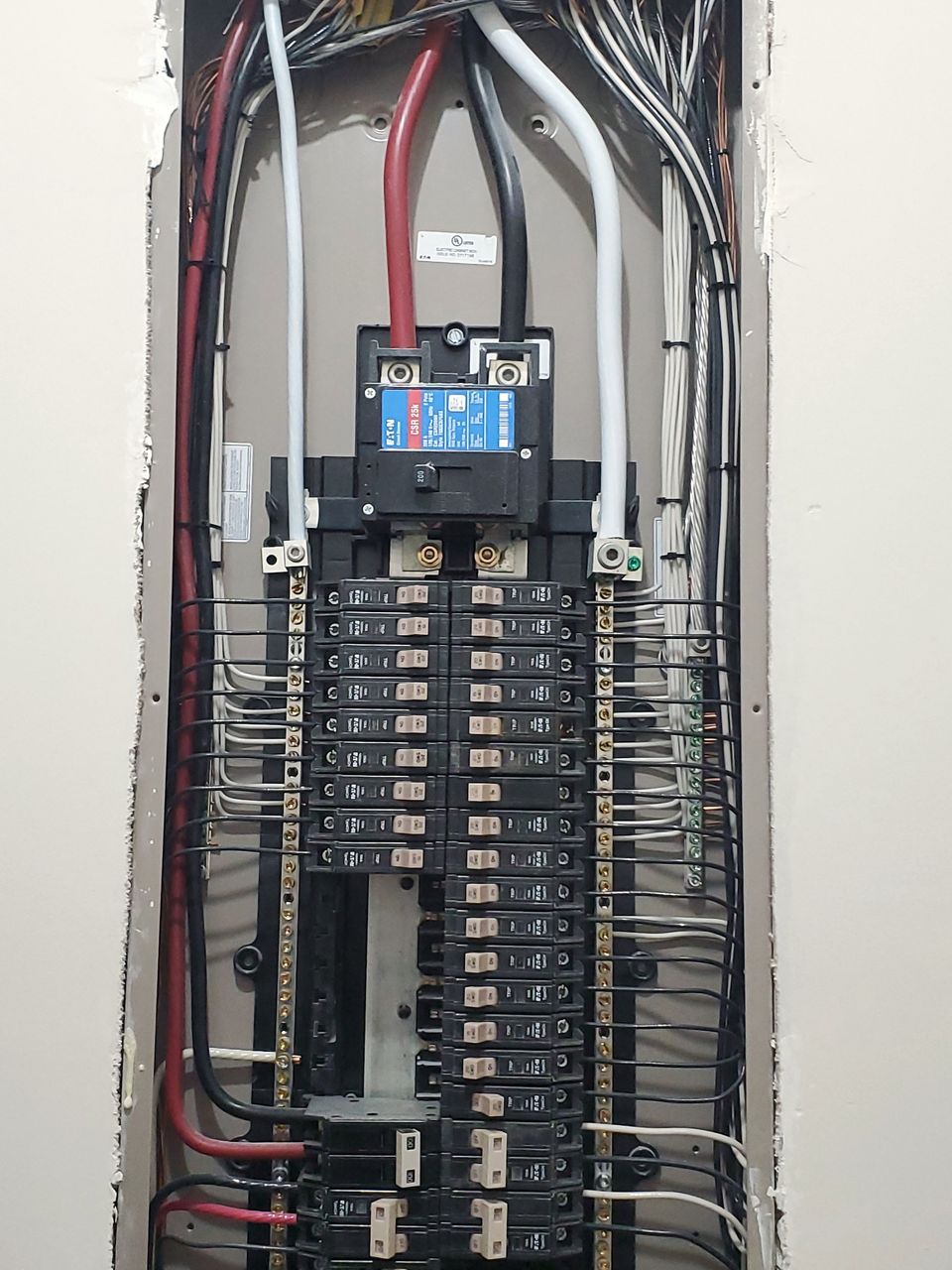
Connections, terminations, breakers, grounding, labeling, and whether the panel matches what’s actually plugged into it today rather than what was there when it was installed.
Buildings change over the years; the panel usually doesn’t, and the gap between the two is where most problems live.
Torquing to spec
We torque lugs and terminations to the manufacturer’s spec.
This is the least interesting sentence on this page and it prevents more failures than anything else on it. A lug that was snugged up by hand and never checked works fine for years, then backs off a fraction, and the loose connection starts making heat every time there’s load on it. That is the bright spot on the infrared picture, and it is also how a panel ends up scorched.
It gets checked with a torque wrench against the number the manufacturer printed on the gear, not by feel. Nobody’s hand is calibrated.
Motor connections and starters
On anything with motors, whether it is a plant, a shop, a grain system or a farm, the connections at the motor take a beating that a lighting circuit never does: heat, vibration, and starting current several times what the motor draws once it is running.
We check motor connections as part of the same walk-through.
And we replace starters that are getting weak. A starter does not usually fail cleanly. The contacts pit and burn, it starts chattering or dropping out, the motor gets harder on itself every time it starts, and it limps along like that until the day it doesn’t. A starter is cheap. The motor behind it is not, and neither is the morning it takes down.
Exit and emergency lighting
Monthly function test, annual full-duration test, documented.
The test itself is quick. The documentation is the part that matters, because the question is never asked on a normal day. It gets asked by an inspector, an insurer, or somebody after an incident, and by then it is either written down or it is not.
A light that has sat on a charger for four years and has never been discharged is not a light anybody has tested. That is what the annual full-duration test is for: it runs the fixture down for its rated time and finds the batteries that would have quit in the first two minutes.
We do this for buildings we work in, with no contract to sign up to. It gets scheduled when it is due.
Get a quote
Contact us today for a free, no hassle quote on your upcoming project.
Call (574) 594-3532 or send us a message.
Also see: emergency electrician · industrial · commercial